

Finding the perfect size raincoat is about balance — between comfort, function, and style. By taking accurate measurements, considering your layers, and checking how the coat moves with you, you’ll stay dry and look good doing it. The right fit doesn’t just protect you from the rain — it makes rainy days a lot more enjoyable.
How to Choose a Rain Jacket & 5-Step Fit Guide
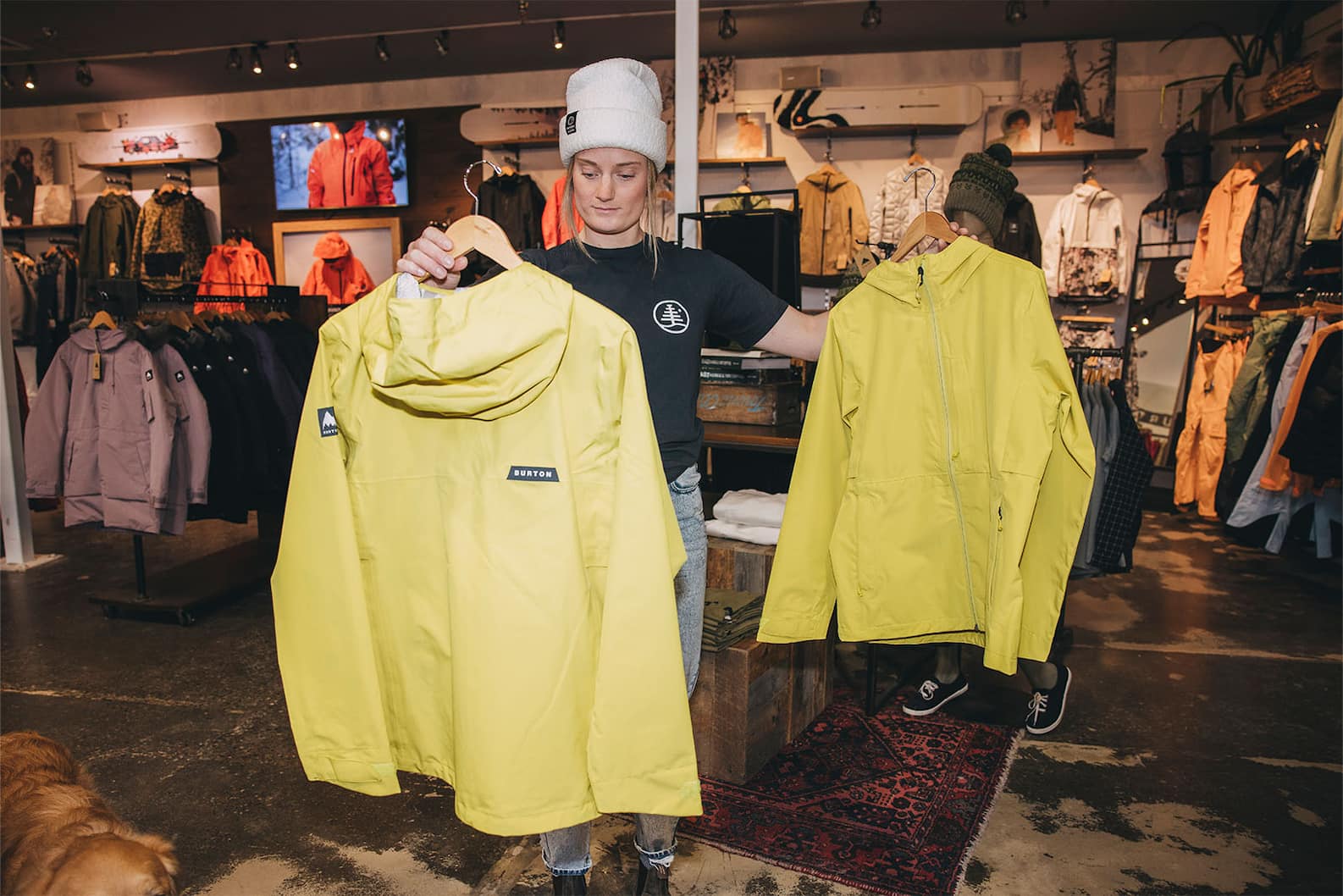
No matter what season it is, a reliable, high-performance rain jacket is a crucial piece of gear that will keep you dry when those raindrops start falling. Given how many options there are, even experienced adventurers can benefit from some professional advice on how to choose a rain jacket. To help you get the right rain jacket for your needs, we assembled this short guide, which covers some of the key things you should consider while shopping for rainwear.
- What’s the difference between waterproof rain jackets and water-resistant rain jackets?
- What is a durable water repellent finish?
- How should a rain jacket fit?
- Understanding Rain Jacket Materials & Construction
What’s the difference between waterproof rain jackets and water resistant rain jackets?
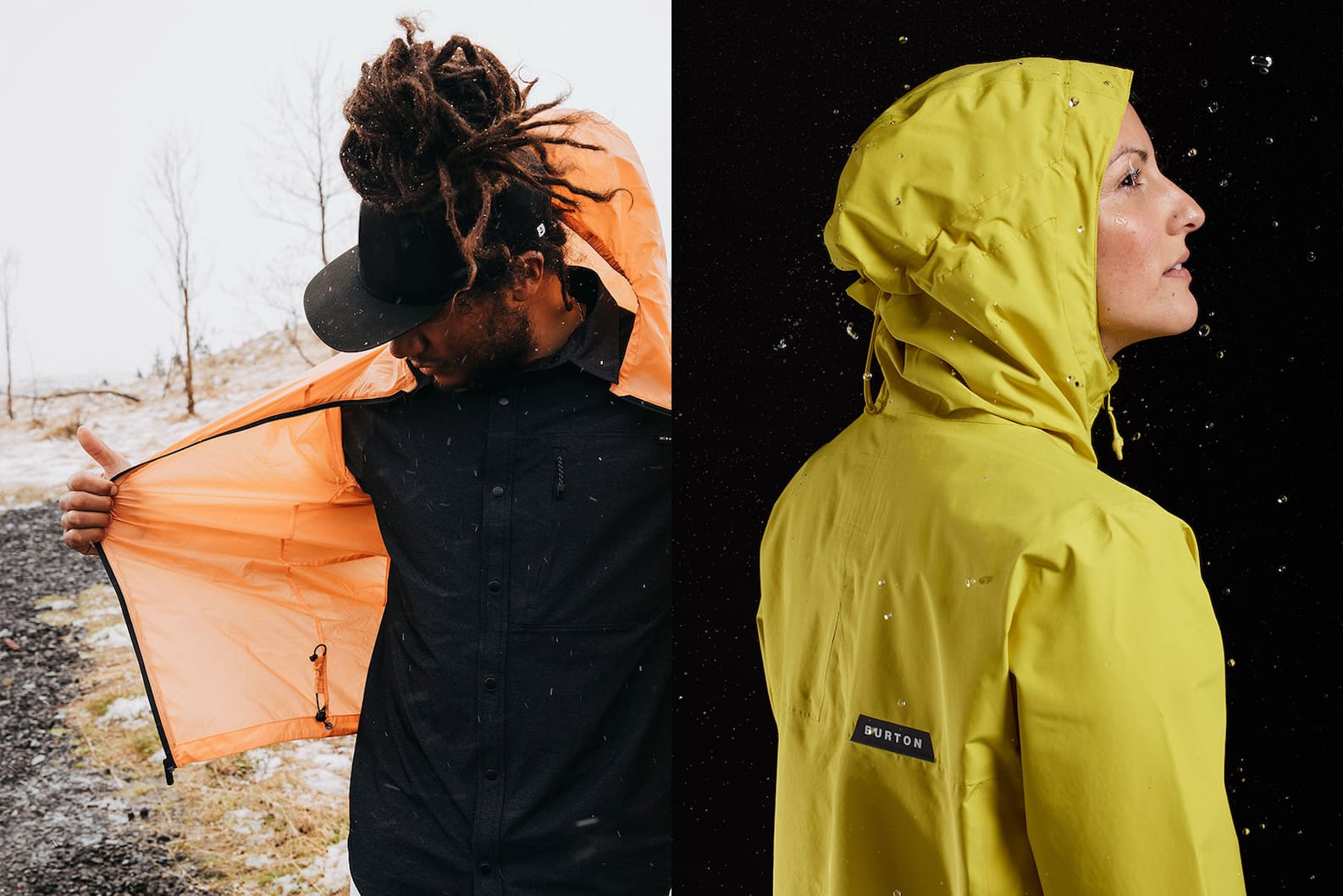
One of the first things you should understand when learning how to choose a rain jacket is the difference between water resistant rain jackets and waterproof rain jackets. While these two types of rainwear might sound similar, there are a few important differences. And since there is no official industry standard definition for “water resistant” versus “waterproof,” some retailers use the terms interchangeably. Additionally, other retailers simply use them incorrectly. These different definitions from brand to brand can make it difficult to understand which rain jackets will keep you dry in a hurricane, and which ones are intended for light spring rain.
Water Resistant Rain Jackets
In general, water resistant jackets are designed to provide protection from short periods of rain, as well as wind and sun exposure. Compared to waterproof multi-layer laminated fabrics, water resistant rain jackets are made from a single layer of synthetic fabric that is coated with a DWR (durable water repellent). Because of this, water resistant rain jackets will wet through when exposed to precipitation for extended periods of time, however, because of their single-layer construction, they are more breathable, a quality that can make them more comfortable for use during high-output activities. Despite not being fully waterproof, water resistant jackets like the Burton [ak] Dispatcher Ultralight Jacket, are still valuable for outdoor activities thanks to their lightweight construction. If they do get wet, they can dry out very quickly, and they’re also very compact and can often fit into tiny bags, like fanny-packs or trail running vests.
Consider a water resistant rain jacket if: You only need short-term protection in a lightweight, packable form. Ideal uses are trail running, short day hikes, short bike rides, and general travel where shelter is never too far away.
Waterproof Rain Jackets
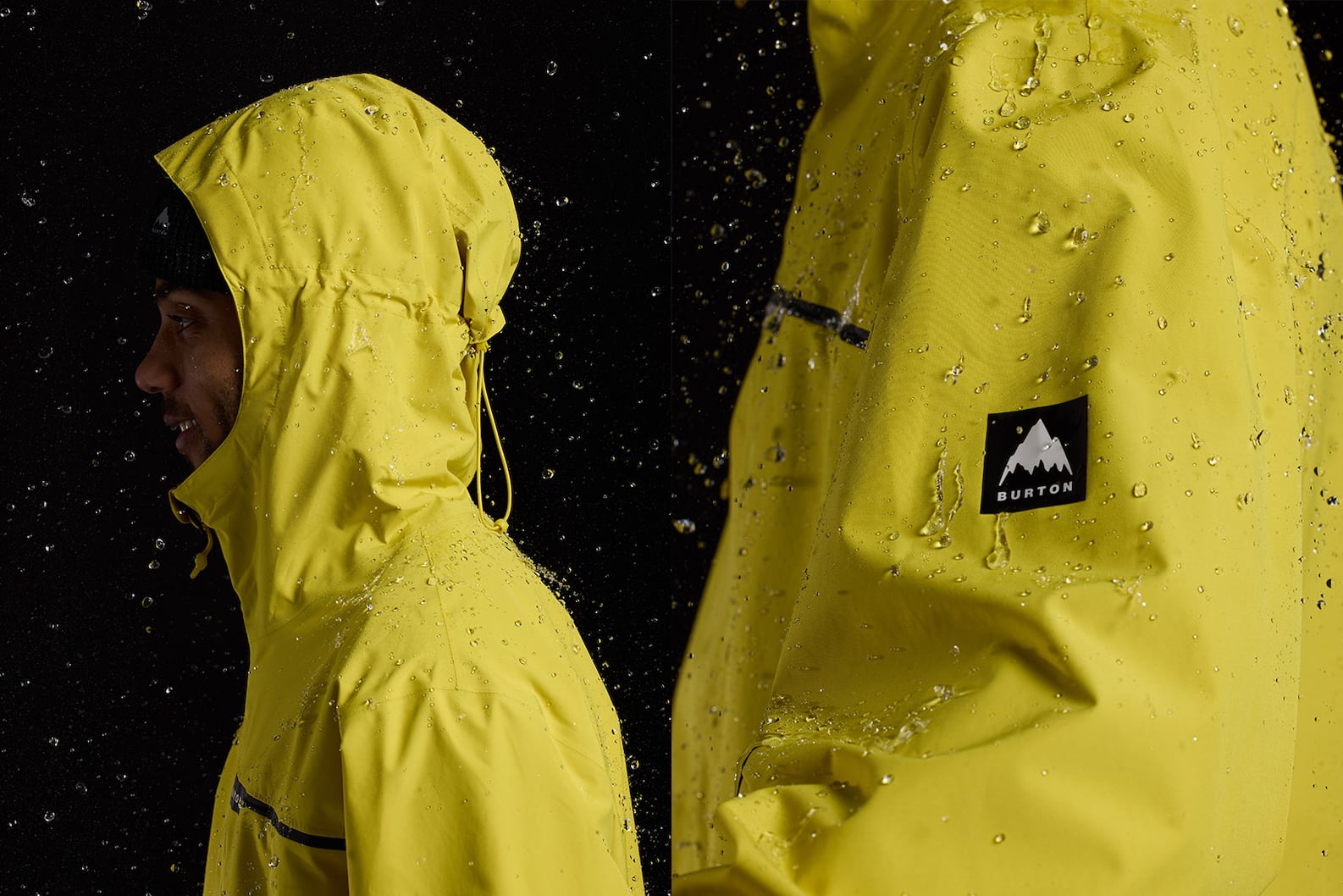
In general, waterproof fabric provides the highest level of protection from exterior moisture. A waterproof rain jacket provides a physical barrier against the elements and is designed to keep you dry during prolonged exposure to wet weather. There are two main types of waterproof rain jackets, including PU (polyurethane) and PVC (polyvinyl chloride) (think: classic yellow rubber raincoat), and laminated breathable waterproof raincoats, like those made with GORE-TEX® PACLITE. Not that for complete protection, waterproof rain jackets should have taped or welded seams to keep moisture out.
Rain jackets with breathable membranes protect you from precipitation while allowing your sweat to escape. PU and PVC rain jackets will protect you from rain and snow, but they don’t breathe which can lead to a clammy feeling in wet weather and during high-output activities. No matter which type of rain jacket you end up selecting, wearing a wicking base layer underneath will provide a greater level of comfort by pulling sweat away from your skin.
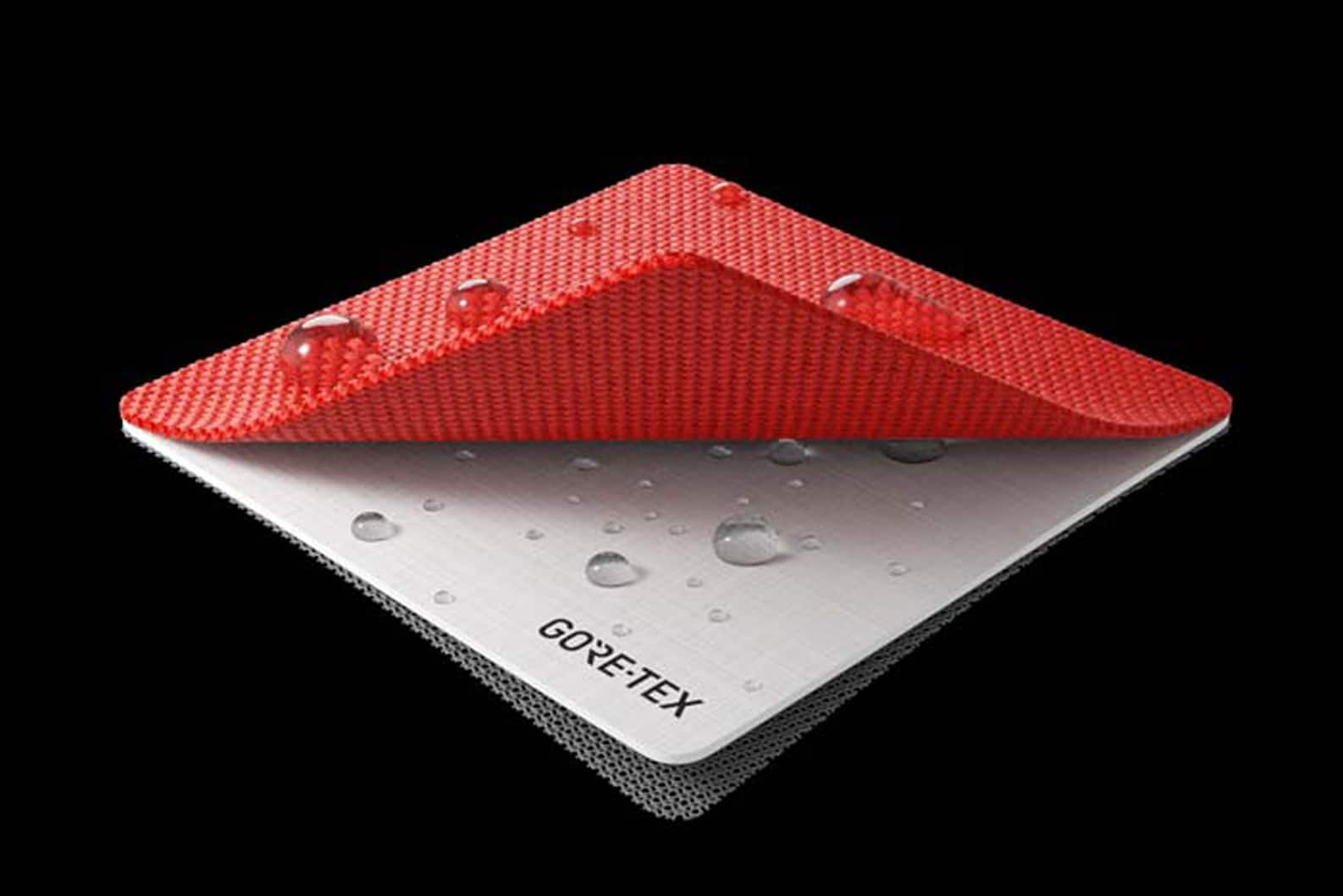
An industry-leading fabric since the 1980’s, GORE-TEX features microscopic holes that are physically smaller than liquid water. This construction prevents rain and snow from entering the jacket from the environment but permits warmer sweat vapor to exit. It’s science. And it’s super cool.
Consider a waterproof rain jacket if: You need uncompromising protection from precipitation. Ideal uses are extended trips into the backcountry, rock climbing, multi-day hiking, backpacking, or any outdoor pursuit where shelter is not readily available.
Pro tip: Dig deeper into the differences between waterproof and water resistant fabrics by reading Waterproof vs. Water Resistant: Measuring Waterproof Ratings.
What is a DWR (durable water repellant) finish?
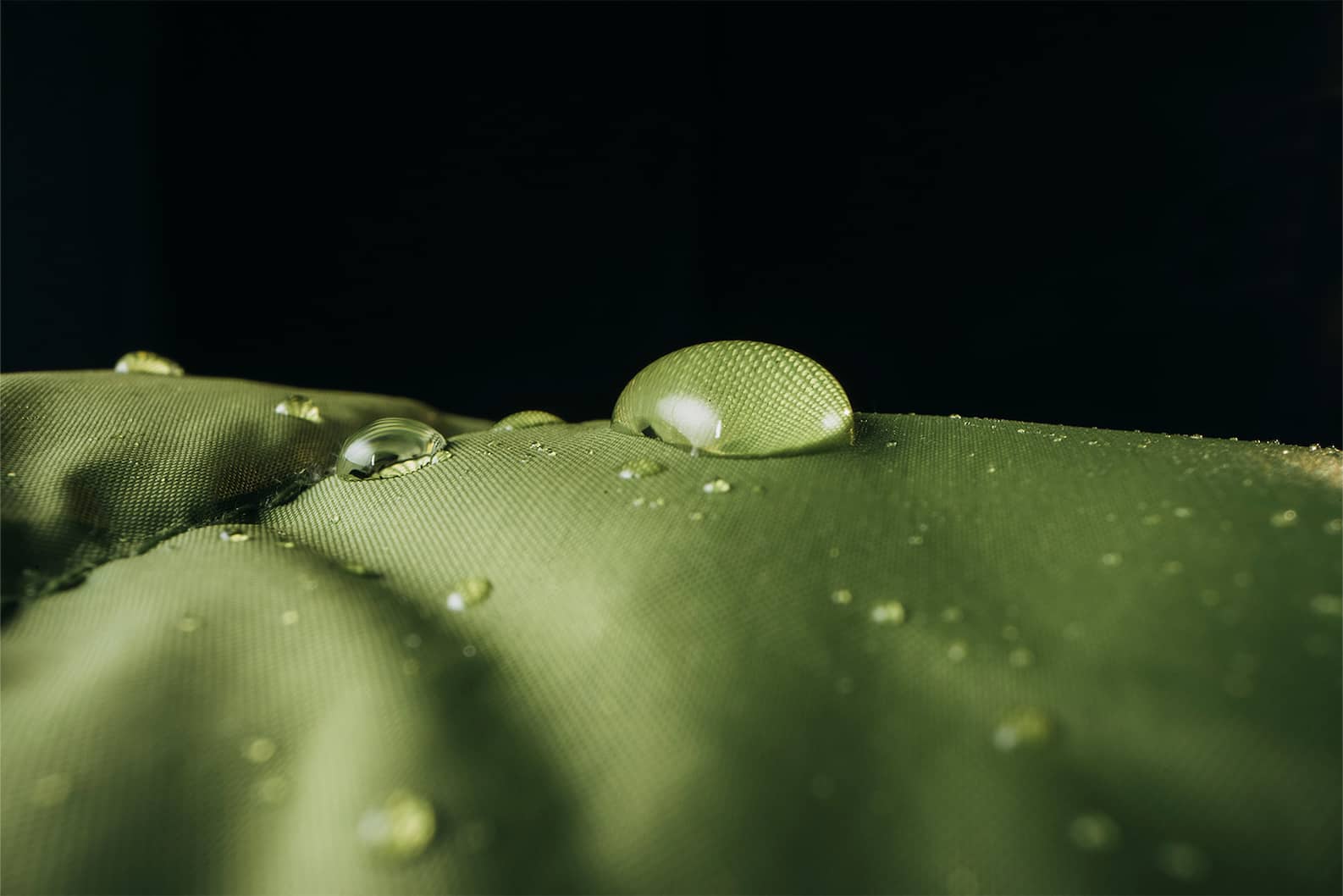
Whether we’re talking about water resistant or waterproof rain jackets, it is the durable water repellant (DWR) finish that helps water bead up and roll off the outer layer of fabric. DWR is a chemical treatment that is applied to rain jackets during the manufacturing process to improve water resistance. With regular use, it is normal for DWR to eventually wear off, but the good news is that it can be easily re-applied at home.
Pro tip: Keep your rain jacket performing like new by periodically re-applying DWR at home. Read How to Waterproof a Jacket to learn how.
Sustainable DWRs
To stay true to our core beliefs while still providing you with the highest quality outdoor gear, Burton has transitioned to PFC-free DWR formulas which are better for people and the planet. We also limit our use of short-chain C6 DWR, and plan to phase it out completely as less-toxic alternatives become available. We encourage you to learn more about Burton’s use of People & Planet-Friendly Materials.
How should a rain jacket fit?
The next thing you should understand when learning how to choose a rain jacket is how it should fit. Often, people purchase rain jackets that are too small for them, which can lead to premature wearing out of the fabric and poor performance in wet weather. A rain jacket that is too small also prevents adequate layering in colder weather. To find a rain jacket that fits properly, your best bet is to drop into your local shop where you can physically try on a few different sizes from a few different brands.
The 5-Step Rain Jacket Fit Guide
In general, the following step-by-step process will help you get the best fitting rain jacket that allows for a full range of motion without feeling tight.
- Gather your layers. When trying on rain jackets, bring the heaviest base layer you would consider wearing as well as any insulating layers that you might want to fit underneath.
- Layer up. At the store, put on your base layer and insulating layer.
- Find your size. Sizing can vary significantly by manufacturer so don’t assume that “your size” is the same across different brands. Try on a few different rain jackets until you find one that fits comfortably.
- Flex it out. With the rain jacket zipped up, extend your arms out in front of your body and cross them over one another so that your elbows overlap. If you feel any tightness across the upper back or shoulders, try a size larger and repeat this process.
- Layer down. Remove your base layer and insulating layer and confirm that the jacket fit is appropriate without them.
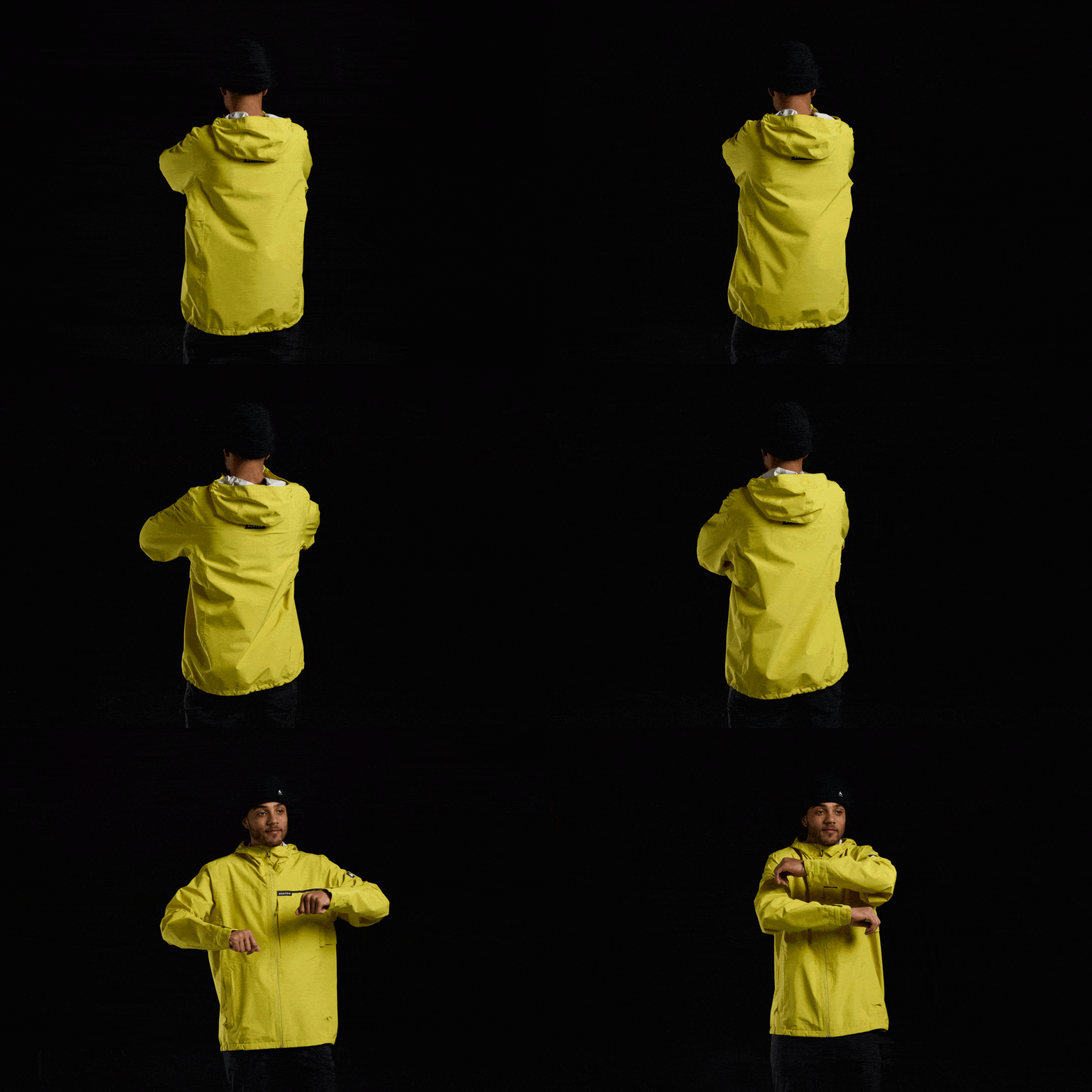
Pro tip: In the long run, assembling a quiver of rain jackets for different seasons will allow you to get the perfect fit, whether you are pairing it with a single lightweight base layer in the summer, or a down jacket in the fall.
Understanding Rain Jacket Materials & Construction
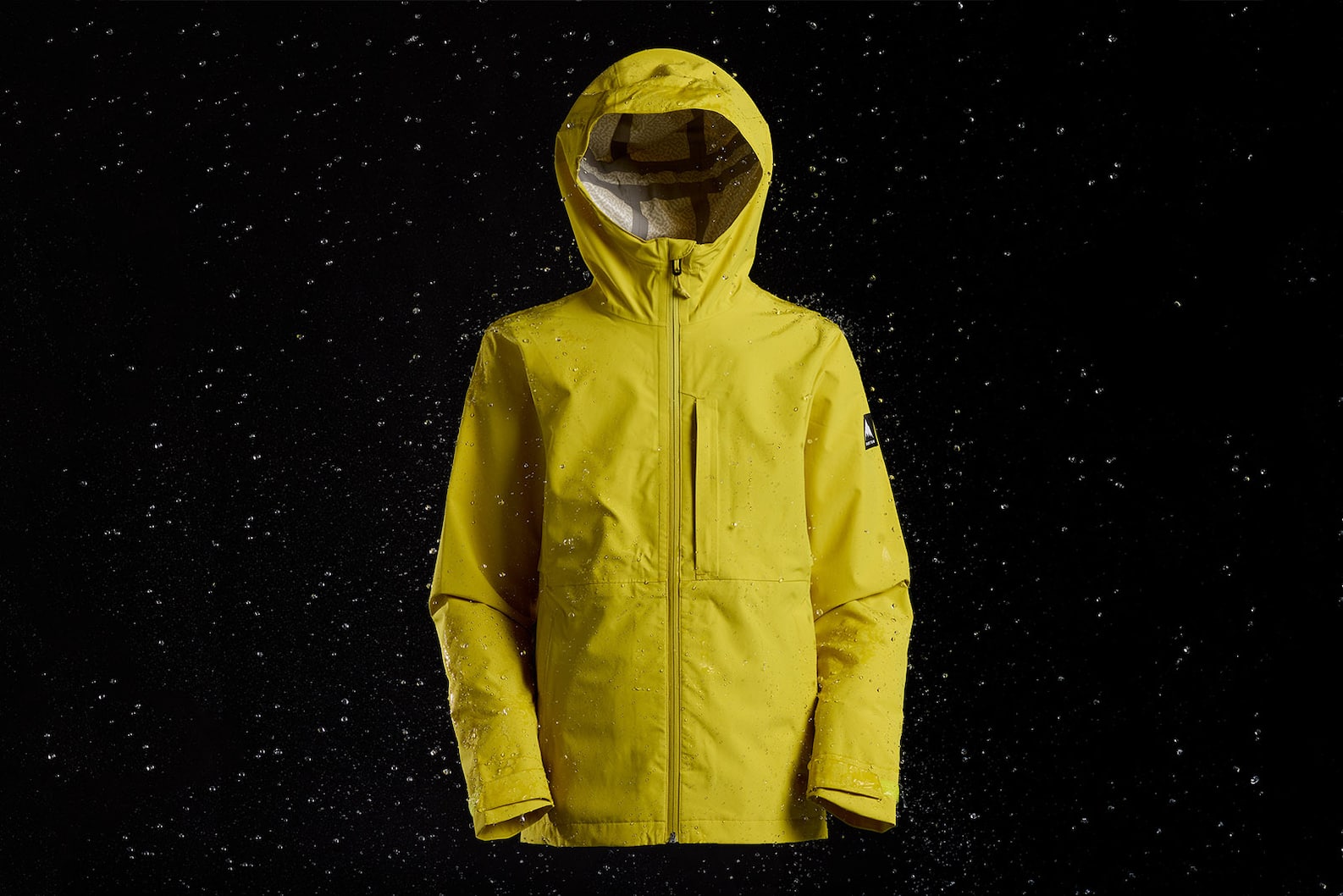
Modern rain jacket construction refers to the layers of material that are used to build the jacket, such as 2-layer, 2.5-layer, and 3-layer.
Single-layer Rain Jackets
Single-layer rain jackets, also known as water resistant rain jackets, are constructed from a single layer of synthetic material that has a DWR treatment applied to the outside. Water resistant rain jackets offer a high level of breathability and packability but are not truly waterproof and will get wet if exposed to precipitation for an extended period of time.
Consider a single-layer rain jacket if: You want a lightweight, extremely packable jacket that offers protection from wind, sun, and light or intermittent precipitation.
2-layer Rain Jackets
2-layer rain jackets are constructed with a face fabric layer (outermost later, often polyester, nylon, or other synthetic fabric) and a breathable waterproof membrane like GORE-TEX. Additionally, 2-layer rain jackets usually have a floating inner drop-liner that’s made from mesh or taffeta, however, this liner is not counted towards the layers of the jacket. 2-Layer rain jackets are generally less expensive than 2.5 or 3-layer jackets but are often less breathable.
Consider a 2-layer rain jacket if: You want a budget-friendly rain jacket for 3-season (spring, summer, fall) use in drier climates where breathability is not your top concern.
2.5-layer Rain Jackets
2.5-layer rain jackets are constructed with a face fabric layer (outermost layer), a breathable waterproof membrane like GORE-TEX, and a textured treatment on the inside surface of the waterproof membrane. 2.5-layer rain jackets are generally very lightweight and packable. The inner textured surface treatment (the .5 layer) is there to protect the inner waterproof membrane from abrasion and wear.
Consider a 2.5-layer rain jacket if: You want a high degree of waterproof protection combined with breathability in a lightweight, packable jacket.
3-layer Rain Jackets
3-layer rain jackets are constructed with a face fabric layer (outermost layer), a breathable waterproof membrane like GORE-TEX, and an inner fabric backing layer. 3-layer rain jackets are often more durable than 2.5-layer jackets, although, despite this extra durability, they can still be reasonably lightweight and packable. Because of the inner fabric backing layer, 3-layer rain jackets deliver the highest degree of comfort, keeping things less clammy during high-sweat activities, even when worn next to the skin.
Consider a 3-layer rain jacket if: You want the highest degree of comfort combined with durability that can be used for any activity, year-round.
A Final Word on How to Choose a Rain Jacket

You should now have enough knowledge to choose the right rain jacket for your needs but keep in mind that every type of rain jacket has pros and cons. You’ll need to decide which qualities are most important to you, whether that’s affordability, packability, breathability, comfort, or durability. The good news is that Burton rain jackets are available in a wide range of materials and fits that can fulfil the needs of any outdoor enthusiast, whether you are heading out for a trail run, a mountain bike ride, or a multi-pitch climbing adventure. And no matter which jacket you choose, you can be confident that everything we make is stress-tested and vetted by the pros.
Discover more from ReviewFitHealth.com
Subscribe to get the latest posts sent to your email.